

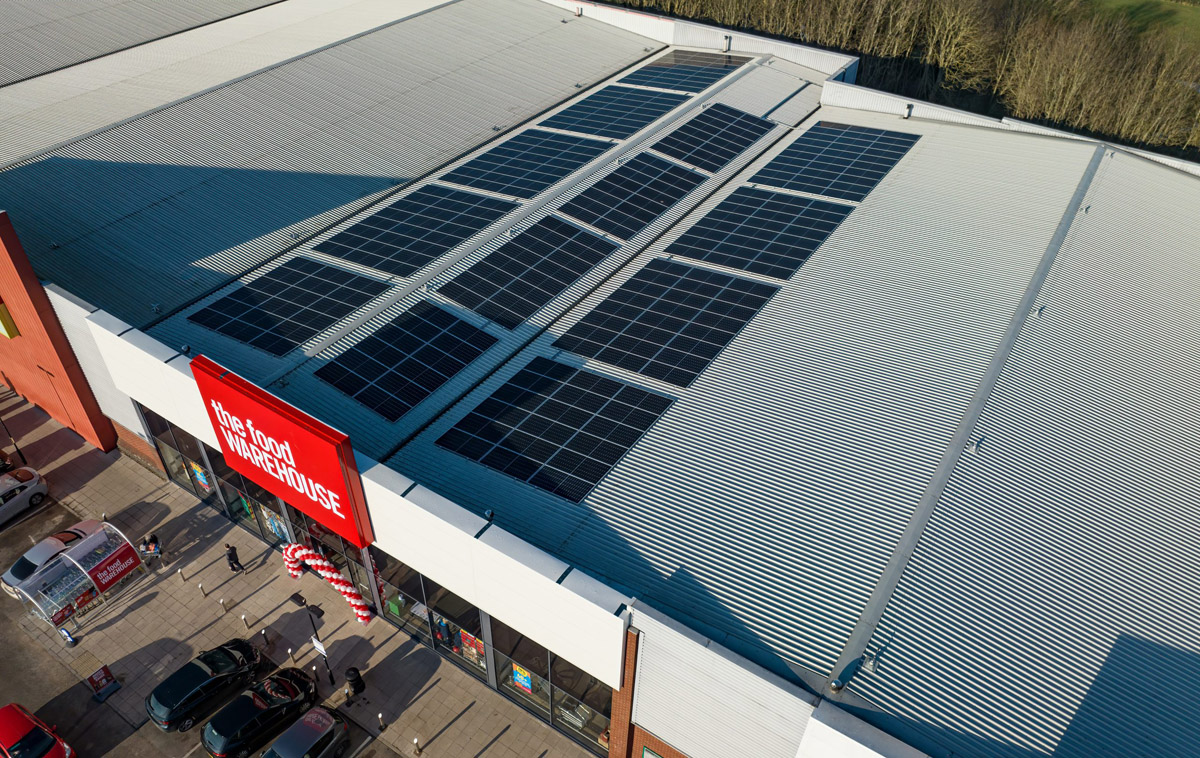
How commercial property portfolios can reduce energy cost risk, improve asset performance and accelerate decarbonisation, without capital investment.
Energy Procurement Is Now a Strategic Decision
Energy price volatility has changed how businesses think about electricity procurement.
For CFOs and Finance Directors, energy is no longer simply a utility cost. It has become a strategic operational risk that requires long-term planning and cost predictability.
At the same time, Asset and Estate Managers are being asked to improve the sustainability performance of commercial property portfolios while supporting wider decarbonisation targets.
Rooftop solar is increasingly emerging as a solution that addresses both priorities.
Through a rooftop solar Power Purchase Agreement (PPA), like those delivered by Ortus Energy in strategic partnership with SSE Energy Solutions, businesses can generate renewable electricity directly from their own buildings without funding the infrastructure themselves.
Under this model, Ortus Energy designs, finances, installs and operates the solar system, while the building owner or occupier purchases the electricity generated on-site at a pre-agreed long-term rate.
Where Asset Strategy and Financial Strategy Meet
Successful energy projects within commercial property portfolios typically deliver value in two areas: asset performance and financial resilience.
For finance leaders, rooftop solar PPAs can offer:
• No upfront capital investment
• Greater certainty around long-term electricity costs
• Reduced exposure to volatile grid prices
• Lower operational energy expenditure
For Asset and Estate Managers, rooftop solar can support:
• Reduction of Scope 2 emissions • Improved sustainability performance across property portfolios • Alignment with net zero commitments • Greater resilience of energy infrastructure at key operational sites
In other words, the same project can support both financial risk management and portfolio decarbonisation.
Why Energy Consumption Patterns Matter
Not every building will deliver the same value from rooftop solar. One of the most important considerations is when electricity is used at the site.
Solar generation peaks during daylight hours. Facilities that consume large amounts of electricity during the day are therefore particularly well suited to on-site solar generation.
These often include:
• Manufacturing facilities
• Food production and cold storage
• Distribution and logistics centres
• Agricultural processing sites
In these environments, solar electricity can directly offset grid consumption during operational hours.
Where demand falls outside daylight hours, technologies such as battery energy storage systems (BESS) can store excess solar generation produced during the day and deploy it later when required.
Understanding these consumption patterns is a critical step in determining the feasibility and value of a rooftop solar project.
From Feasibility to Power
Before any installation begins, rooftop solar projects typically go through a structured evaluation process.
This ensures both the technical and commercial viability of the system.
The process generally includes:
1) Roof analysis Using satellite imagery to assess roof orientation, pitch, shading and available installation area.
2) Energy consumption analysis Reviewing electricity demand profiles to understand how solar generation can offset grid usage.
3) 3D system modelling Digital simulations that optimise panel placement and estimate energy generation.
4) Commercial PPA proposal A long-term electricity supply agreement that defines expected energy generation, cost savings and emissions reductions.
This feasibility process ensures that decisions are based on data, operational reality and commercial performance.
Turning Roof Space Into Energy Assets
Across the UK, thousands of commercial and industrial buildings have large roof areas capable of generating significant renewable electricity.
Yet in many portfolios, these surfaces remain underutilised.
For organisations developing long-term energy and decarbonisation strategies, rooftop solar PPAs offer a practical way to transform unused space into productive clean energy infrastructure.
For finance leaders, this can help manage long-term energy cost exposure.
For asset managers, it can improve building sustainability performance while contributing to wider portfolio decarbonisation.
As businesses navigate the transition to a lower-carbon economy, one question is becoming increasingly relevant: What could your roof space generate? Get in Touch If you are responsible for energy strategy, asset performance or operational cost management, it may be worth assessing whether your property portfolio is suitable for on-site solar.
Ortus Energy, in strategic partnership with SSE Energy Solutions, works with commercial and industrial organisations to evaluate rooftop solar opportunities through detailed feasibility analysis.
If you would like to understand what your roof space could deliver in terms of energy generation, cost savings and emissions reduction, our team would be pleased to start that conversation. Contact us today >>